
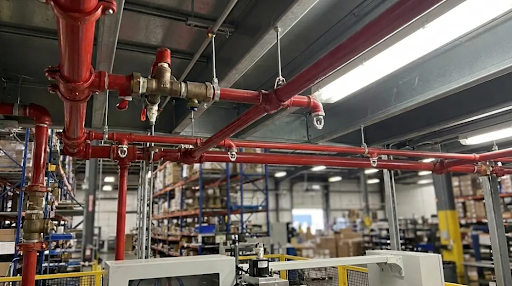
Industrial plumbing systems receive sustained attention at two moments — during initial design and immediately after something fails — and the period between those two moments is where the real damage accumulates. Fittings are the components most likely to be the origin point of a failure and the least likely to receive careful individual attention during system specification, partly because they are small relative to the pipework they connect and partly because the implicit assumption is that a fitting rated for the nominal system pressure will perform adequately without further consideration of the specific conditions at each connection point. Industrial plumbing fittings that were correctly specified for one set of conditions and then subjected to process changes, temperature excursions, or fluid composition shifts that nobody recorded in the system documentation are a very common source of failures that appear sudden but have been developing for considerably longer than anyone realised.
Material Choice Is Not Just About Corrosion
The material selection conversation for industrial fittings almost always starts with corrosion resistance and stops there, which misses a significant portion of what material choice actually determines in service. Stress corrosion cracking — a failure mode where a material that shows no general corrosion nevertheless develops cracks under the combined influence of tensile stress and a specific chemical environment — has caused failures in fittings that passed every standard corrosion assessment applied during specification. Permeation of aggressive fluids through polymer fittings at elevated temperatures, zinc dezincification in brass fittings exposed to certain water chemistries, and embrittlement of materials exposed to hydrogen-containing process streams are all failure mechanisms that are not captured by general corrosion resistance data and that require a more detailed understanding of the specific application environment than catalogue comparison provides.
Thread Mismatch and the Failures It Causes
BSP and NPT threads look similar in most sizes and are regularly treated as interchangeable in industrial settings where fittings from different sourcing origins have accumulated over years of operation and modification, and this treatment produces joint integrity problems that tend to appear as gradual leaks rather than sudden failures — which means they persist unaddressed for longer than acute failures and cause more cumulative damage to surrounding equipment, insulation, and structural elements. Industrial plumbing fittings brought together across different thread standards achieve apparent engagement during assembly that gives no indication of the compromised sealing geometry at the thread form junction, and the leak that follows is frequently attributed to thread sealant failure or installation technique rather than the fundamental dimensional incompatibility that caused it.
Pressure Ratings and What They Do Not Cover
The working pressure stamped on a fitting represents its rated capacity under steady-state conditions at a specified temperature, and industrial systems are rarely steady-state in the way that this rating implies. Rapid valve closure in liquid systems generates pressure transients that can substantially exceed the steady operating pressure of the system in the fraction of a second before the surge wave dissipates, and fittings specified to the nominal system pressure without consideration of surge behaviour are exposed to peak pressures their ratings do not account for. Industrial plumbing fittings in systems with pumps, quick-acting valves, or significant fluid column lengths need surge analysis to inform the specification rather than discovering the gap between rated and experienced pressure through fitting failures at the most vulnerable connection points in the system.
Process Purity and What Fittings Contribute to It
In food processing, pharmaceutical manufacturing, and other industries where process purity is a regulatory requirement rather than a preference, the fitting is not merely a mechanical connector but a potential contamination source whose contribution to the fluid stream needs to be understood and controlled. Surface finish within the fitting bore determines whether biological contamination can establish itself in surface features during production runs, and the gap between a fitting that is smooth enough to be reliably cleaned in place and one that retains contamination despite standard CIP procedures is not visible to the eye during installation. This is the kind of fitting specification detail that does not appear in general industrial catalogues and that requires either application-specific expertise or a supplier who understands the regulatory requirements of the industry and can demonstrate that the fittings they supply meet them.
Standards Compliance Beyond the Paperwork
Certification and standards compliance for industrial plumbing fittings in regulated applications is not administrative overhead that can be managed after installation if the relevant documentation was not obtained during procurement — it is a precondition for pressure system inspection, regulatory audit, and insurance coverage that uncertified fittings cannot satisfy retroactively regardless of their apparent quality. The traceability records, material test certificates, and pressure ratings documentation that certified fittings carry provide the evidence base that inspection regimes require, and facilities that cannot produce this documentation for fittings within their pressure systems are exposed to enforcement action that is considerably more disruptive than the additional procurement effort required to source certified components in the first place.
Conclusion
Industrial plumbing fittings are the components around which system reliability and safety are either built correctly or compromised gradually, and the specification decisions that determine which fittings are used in which applications deserve the same rigour applied to every other element of an industrial plumbing system. Getting this right from the outset produces systems that perform reliably across their intended service life — getting it wrong produces the kind of failures that always seem to happen at the worst possible moment and always turn out to have been preventable with better information applied earlier in the process.