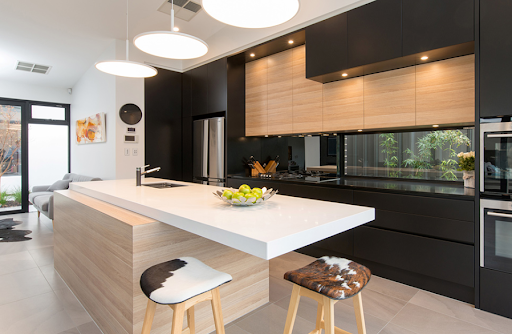
Most Adelaide kitchen renovations follow a predictable path — someone visits a large showroom, selects from a range of standard configurations, chooses a door profile and a benchtop colour, and ends up with a kitchen that looks broadly similar to the one their neighbours renovated two years earlier. It is not that the result is bad. It was designed for nobody in particular, which means it fits the actual space imperfectly, accommodates the household’s real cooking habits only by coincidence, and starts showing the limitations of its materials and hardware within a few years of daily use. Kitchen joinery in Adelaide that begins with the actual space, the actual people, and the actual way a kitchen gets used produces a categorically different result — and the difference is apparent not just visually but in how the kitchen functions across every ordinary day.
When the Space Is Not Standard
Adelaide homes, particularly the older character properties in suburbs like Unley, Norwood, and Prospect, contain kitchens where almost nothing is square, level, or standard dimension — and this is precisely where the limitations of a range-based kitchen become most obvious and most costly to work around. Ceiling heights that sit outside the standard module range, walls that are not plumb, floor levels that vary across the kitchen footprint, and corner configurations that standard units cannot navigate without creating dead space or visual awkwardness — all of these are problems that custom joinery resolves by designing to the actual conditions rather than forcing the space to accommodate the product. The kitchen that results from this approach uses every available centimetre deliberately rather than filling gaps with filler panels and hoping nobody looks too closely at the corners.
Material Quality Across Real Time
The materials used in custom joinery differ from flat-pack alternatives in ways that are invisible at installation and become increasingly apparent across the years of steam, heat, moisture, and daily handling that a working kitchen experiences. Particleboard with printed foil wrap — the core material of most budget kitchen installations — responds to moisture at cut edges and joins in predictable ways that become visible within a few years of use near sinks, dishwashers, and cooking surfaces. Quality substrate materials with proper edge treatment, solid timber components, and lacquer or two-pack finishes that have been properly prepared and sealed behave differently across the same conditions, maintaining their integrity in ways that change what the kitchen looks like after a decade of real use rather than just on the day it was completed.
Hardware That Changes Daily Experience
The cumulative effect of quality hardware on the daily experience of using a kitchen is something that most people understand intellectually but consistently underestimate until they have lived with the difference. Kitchen joinery in Adelaide specified with full-extension drawer runners, soft-close mechanisms, and properly rated hinge systems produces a tactile experience across thousands of daily interactions — opening, closing, pulling, pushing — that changes how a household relates to its kitchen at a level below conscious evaluation. The drawer that opens smoothly and closes silently registers differently in daily life from the one that sticks, rattles, and slams, and this difference compounds across years in ways that affect how a kitchen feels to use long after the initial visual impression has become familiar.
The Coherence That Range Kitchens Cannot Achieve
There is a visual quality to a well-executed custom kitchen that is difficult to name precisely but immediately legible in person — a sense that the kitchen was designed for this room rather than installed in it. Proportions that relate to the ceiling height and the room’s dimensions, profiles that complement the architectural character of the home, reveals and shadow lines that are consistent across every element rather than varying where different product components meet at slightly different tolerances — these are the details that separate a kitchen that feels resolved from one that feels assembled. Range kitchens, however well specified, are designed to work across an enormous variety of applications, which means they are optimised for none of them with quite the same precision that a custom design achieves for one specific space.
What Buyers Notice Before They Say Anything
Adelaide buyers who have spent time looking at properties across different price points develop a rapid, largely unconscious sensitivity to the signals a kitchen sends about the overall quality of a home — and these signals are registered before any explicit assessment of the kitchen has taken place. A custom joinery installation sends different signals from a flat-pack kitchen in ways that affect how buyers feel about a property and what they are prepared to commit to, and these feelings form quickly during an inspection and are difficult to reverse through any subsequent conversation about the kitchen’s features or specifications.
Conclusion
Kitchen joinery in Adelaide gives homeowners a kitchen that was genuinely designed for their space, built from materials that maintain their integrity across years of real use, and configured around how the household actually cooks rather than how a standard range assumes kitchens are used. The result functions better, looks better across its full working life, and communicates quality to future buyers in ways that range kitchens simply do not — making it the kitchen decision that most people who make it describe as one of the best investments in their home.