
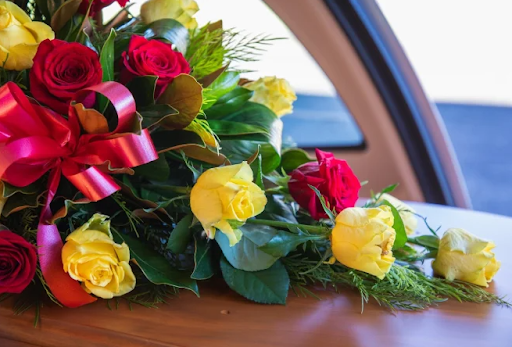
There’s a particular moment at most funerals when someone stands in front of the flowers longer than they meant to, just looking. Nobody plans that pause. It happens because the arrangement is saying something the eulogy hasn’t quite managed yet. That’s usually the real reason families spend so long choosing funeral flower arrangements, even when everything else about the day feels rushed. It’s not really about décor, whatever the florist’s brochure might suggest. It’s about finding some way to say something that refuses to come out as actual words. People who’ve done this before describe it less as shopping and more as translating.
Every family seems to remember one specific bloom a parent or grandparent loved, often something unremarkable like sweet peas or a particular rose from the garden. Nobody thinks to mention this until they’re standing in a florist’s shop, suddenly certain it has to be included somehow. That instinct is worth trusting, because generic tributes rarely land the way a genuinely personal one does at the service itself. Florists who’ve worked funerals for years say they can usually tell which arrangements were chosen from a catalogue and which came from memory. The difference isn’t really visible to a stranger, but it’s obvious to anyone who knew the person being remembered. One daughter insisted on including cornflowers because her father grew them badly, every single year, and never once succeeded properly. That kind of detail means more at a funeral than anything symmetrical or professionally coordinated ever could.
Why Some Families Skip White Entirely
There’s an old assumption that funeral flowers should be white, restrained, formal, almost apologetic in how quiet they are. Plenty of families now reject that outright, choosing yellows, oranges, even deep pinks that would look more at home at a birthday. That choice isn’t disrespect, whatever older relatives might quietly think during the service itself. It’s usually a deliberate decision to reflect someone who was loud, funny, or simply allergic to anything muted or dull. Florists mention noticing this shift over recent years, more requests for colour, fewer requests for the traditional, expected palette. One woman asked for sunflowers specifically because her husband called her that, sunflower, for forty years without explanation. Nobody at the service needed the reference explained. Everyone who mattered already knew exactly what it meant.
The Arrangement That Arrives Without Being Asked
Grieving families rarely think clearly about logistics, and florists who work funerals regularly understand this better than almost anyone else involved. Good ones ask the quiet, practical questions nobody else remembers to ask during those first disorienting days. Where does the coffin go. What time does the hearse leave. Does the crematorium have space for a large standing display or not. Families describe a particular relief in not having to think about any of it themselves during an already overwhelming week. That relief rarely gets mentioned afterwards, yet it’s often what people remember most gratefully once the day has actually passed. Someone else handled it properly, without being asked twice, and that mattered more than the arrangement’s actual appearance.
The Bloom Someone Presses and Keeps
Photographs from funerals tend to stay in a drawer, largely unlooked at, for years after the event itself. Flowers work differently, somehow, lingering in memory with a clarity photographs rarely manage to replicate afterwards. Several families mention pressing a single flower from the main arrangement, keeping it somewhere quiet, a book or a small frame. It’s a strange kind of keepsake, fragile and slightly absurd, yet it holds weight nobody can quite explain properly. One son kept a pressed lily in his wallet for years, not for sentiment exactly, just because throwing it away felt wrong somehow. That instinct, oddly, is common enough that florists sometimes suggest it before families even think to ask.
What the Flowers End Up Doing
By the time the service ends, most people can’t recall a single line from the eulogy properly, word for word. They remember the flowers though, oddly specific details, a particular shade, an unexpected inclusion, the smell near the door. That’s not a flaw in how funerals work, it’s just how memory tends to behave under that much emotional weight. Flowers become the thing people actually hold onto, even when everything else about the day blurs together afterwards.
Conclusion
Grief doesn’t wait for the right words, and most families discover that painfully during the days leading up to a funeral. Choosing thoughtful funeral flower arrangements becomes one way of saying something that refuses to translate into an actual sentence. From a remembered bloom to an unexpected colour choice, the details matter more than families initially expect beforehand. It’s rarely about impressing anyone, more a quiet way of getting one small thing genuinely right. Families who choose carefully often mention, months later, that the flowers were the part they remember most clearly. Whatever else changes about how funerals are done, flowers still manage to say what nothing else quite can.